How to Check Manufacturing Date of a New Car Before Buying
Buying a brand-new car is an exciting experience, but before taking delivery, it is important to check more than just the colour, features and price. One of the most important things to verify is the manufacturing date of the car. A vehicle may be sold as new even if it was manufactured several months earlier.
Checking the manufacturing date helps you understand how long the car has been sitting in the factory, stockyard or dealership. It can also help you make a better buying decision, especially if the vehicle is several months old. In this guide, we explain how to check the manufacturing date of a new car, where to find it and what you should do if the car is older than expected.
Why Is the Manufacturing Date Important?
The manufacturing date tells you when the vehicle was actually produced. It is different from the registration date and delivery date. For example, a car manufactured in January but delivered in September is still considered a new car when sold, but it has already spent several months in inventory.
A long storage period does not automatically mean the car is bad. However, it gives you a reason to inspect the vehicle carefully and ask the dealer about the stock age, warranty and any applicable discount.
Where Can You Find the Manufacturing Date of a Car?
There are several places where you can check the manufacturing date of a new car. The exact location can vary depending on the manufacturer and model.
1. Check the VIN
The VIN (Vehicle Identification Number) is one of the most useful identification numbers on a car. It is generally a 17-character combination of letters and numbers.
You can usually find the VIN on the dashboard near the windshield, the driver's side door frame, or in the vehicle documents. Some manufacturers also provide VIN information through their official apps or customer portals.
The VIN can contain information about the vehicle, including its production details. However, the way the manufacturing information is encoded varies between manufacturers. Therefore, do not assume that the same VIN decoding method works for every car brand.
2. Look at the Manufacturer Label
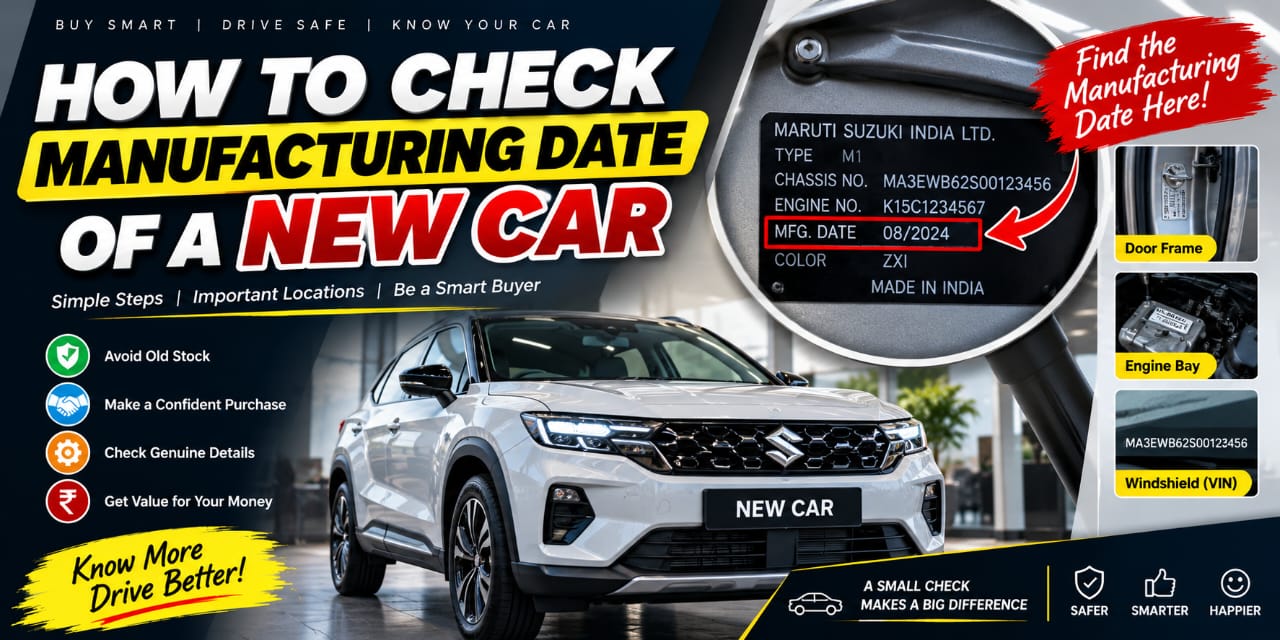
Many cars have a manufacturer or certification label that contains production information. Check areas such as the driver's side door pillar, door frame, engine bay or other manufacturer-specified locations.
The label may show the month and year of manufacture. For example, a label displaying "06/2026" indicates that the vehicle was manufactured in June 2026.
3. Check the Vehicle Documents
Ask the dealership to show you the documents supplied with the vehicle. Depending on the manufacturer, the invoice, warranty documentation, vehicle identification records or other paperwork may contain production-related information.
Compare the information in the documents with the VIN and physical labels on the vehicle. If you find differences, ask the dealer for clarification before accepting delivery.
4. Ask the Dealer for the Stock Details
The dealership should be able to provide details about when the vehicle was received into their inventory. You can ask questions such as:
- When was this vehicle manufactured?
- When did it arrive at the dealership?
- How long has it been in stock?
- Was it previously displayed or used as a demo vehicle?
- Is there any special discount because of the vehicle's stock age?
Getting these details before signing the final delivery documents can help you avoid surprises.
Manufacturing Date vs Registration Date vs Delivery Date
These three dates are different and should not be confused.
| Date | Meaning |
|---|---|
| Manufacturing Date | The month and year when the vehicle was produced. |
| Registration Date | The date when the vehicle is officially registered with the relevant transport authority. |
| Delivery Date | The date when the dealer hands over the vehicle to the customer. |
For example, if your car was manufactured in March 2026, registered in August 2026 and delivered in September 2026, the manufacturing date remains March 2026.
How Old Is Too Old for a New Car?
There is no universal rule that says a new car must have been manufactured within a particular number of months. However, many buyers prefer a relatively fresh vehicle, particularly when buying a popular model that is readily available.
If the car is several months old, inspect it more carefully. Check the tyres, battery, paint, brakes, fluids, interior and exterior for signs of prolonged storage or handling.
You can also negotiate with the dealer if the vehicle has been in stock for a long period. Depending on the situation, the dealer may offer a discount, accessories or other benefits.
Check the Tyres and Battery Too
The manufacturing date should not be your only check. Look at the tyre manufacturing date as well. Tyres have their own production markings, which can help you determine when they were manufactured.
Also inspect the battery and ask the dealer whether the vehicle was periodically maintained while in stock. A car that has remained parked for a long period may require additional checks before delivery.
What to Do If the Dealer Does Not Disclose the Date?
If you are unable to verify the manufacturing date, ask the dealer to provide written confirmation or relevant vehicle documentation. Do not rely only on verbal assurances.
If the production date is significantly older than you expected, discuss the issue with the dealership before completing the purchase. You can ask for another, newer vehicle if available or negotiate an appropriate deal based on the stock age.
Manufacturing Date Check During PDI
The manufacturing date should be included in your Pre-Delivery Inspection (PDI) checklist. Before taking delivery, verify the VIN, manufacturing details, odometer reading, exterior condition, tyres, lights, fluids, battery and safety equipment.
Taking a few extra minutes to check these details can help ensure that the vehicle you receive matches the vehicle you agreed to purchase.
Final Thoughts
Knowing how to check the manufacturing date of a new car is an important part of the car-buying process. Start by checking the VIN and manufacturer label, then verify the information with the dealership's documents. Also compare the manufacturing date with the registration and delivery dates.
A slightly older vehicle is not necessarily a bad purchase, but you should know its age before accepting delivery. Combining the manufacturing-date check with a detailed PDI can help you make a more informed decision and ensure that your new car is in the condition you expect.