EV Interior Cleaning Guide for Indian Conditions
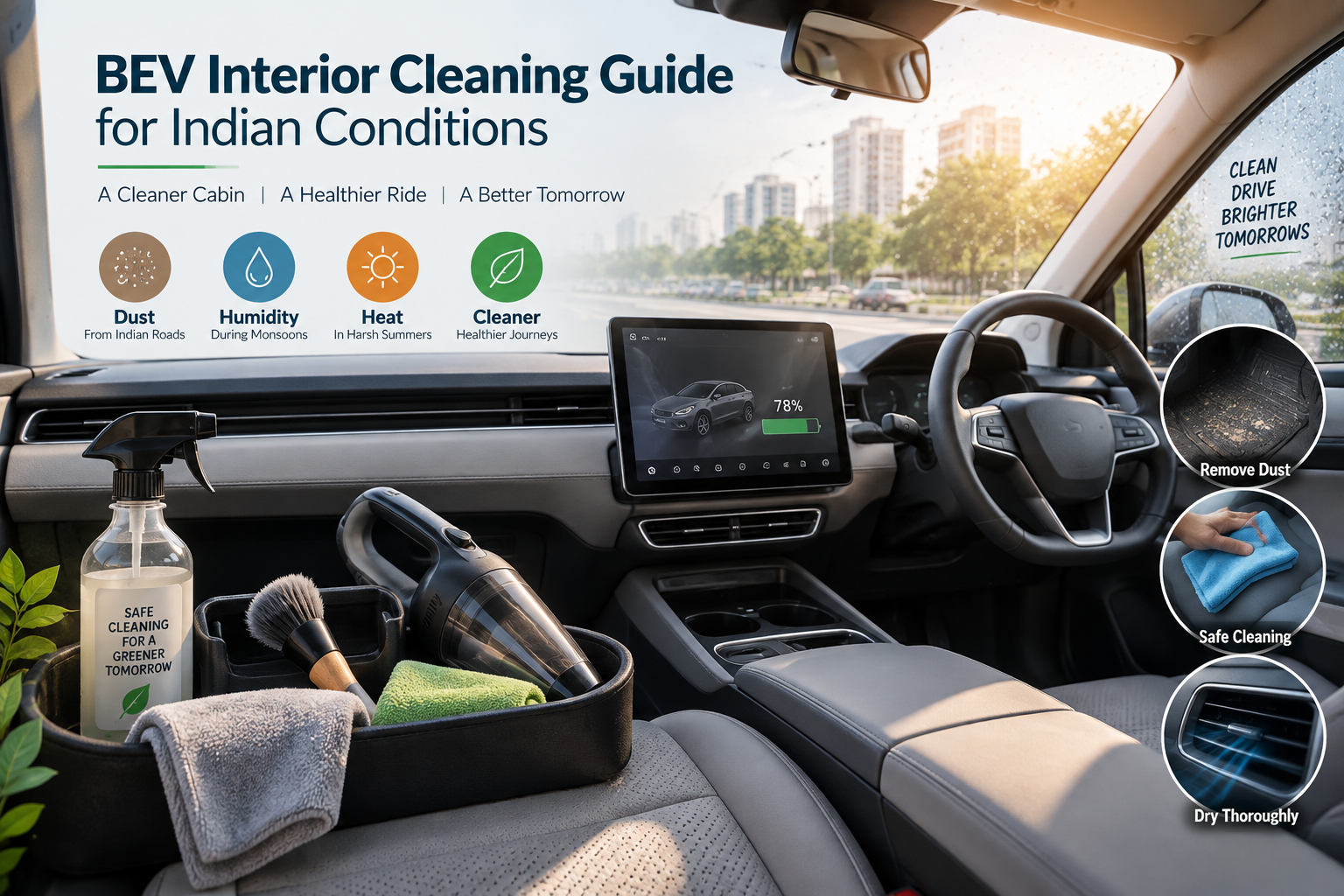
Electric vehicles are becoming a common sight on Indian roads, especially in cities where people want quieter, cleaner and more convenient daily transportation. While EVs have fewer mechanical parts than petrol or diesel cars, their interiors still need regular cleaning and care. Indian conditions can be especially challenging because of dust, heat, humidity, pollution, monsoon moisture and frequent use of air conditioning.
A proper EV interior cleaning routine helps keep the cabin fresh, comfortable and hygienic. It can also protect materials such as seats, dashboards, carpets, door panels and touchscreen surfaces from premature wear.
Why EV Interior Cleaning Is Important in India
Indian roads expose car interiors to plenty of dust and pollutants. When doors or windows are opened, fine dust can quickly settle on the dashboard, seats and other surfaces. During summer, high cabin temperatures can make dust stick to surfaces, while monsoon weather can bring moisture, muddy footwear and damp carpets.
EV owners should also pay attention to the technology inside the cabin. Modern electric cars often have large infotainment screens, digital instrument clusters, wireless charging pads, multiple sensors and electronically controlled features. These areas require careful cleaning instead of excessive water or harsh chemicals.
EV Interior Cleaning Checklist
- Remove loose dust and dirt first.
- Vacuum seats, carpets and floor mats.
- Clean the dashboard with a soft microfiber cloth.
- Use a suitable screen-safe cleaner for infotainment displays.
- Clean door panels and storage compartments.
- Check and clean air-conditioning vents.
- Remove stains from seats as soon as possible.
- Dry carpets properly after monsoon cleaning.
- Clean glass and mirrors without leaving residue.
- Avoid spraying liquid directly onto electronic components.
How to Clean an EV Interior Step by Step
1. Remove All Loose Items
Start by removing bottles, papers, bags, charging accessories and other objects from the cabin. Check door pockets, centre consoles and seat-back pockets. This makes the cleaning process easier and prevents small objects from getting damaged.
2. Vacuum the Cabin Properly
Vacuuming should come before wet cleaning. Use a car vacuum cleaner to remove dust, sand, food crumbs and hair from seats, carpets and floor areas. Pay special attention to the gaps around the seats and centre console.
For Indian conditions, vacuuming once every week or two weeks can be useful if the vehicle is driven regularly in dusty areas.
3. Clean the Dashboard Carefully
The dashboard collects a lot of dust because of sunlight and airflow from the AC system. Use a clean microfiber cloth to remove surface dust. For deeper cleaning, use a mild interior cleaner suitable for the dashboard material.
Do not pour or spray liquid directly onto the dashboard. Spray a small amount onto the microfiber cloth instead. This reduces the risk of liquid entering switches, vents or electronic components.
4. Clean the Infotainment Screen
Modern EVs often depend heavily on touchscreen controls. Fingerprints, dust and smudges can quickly make the screen look dirty.
Use a clean, soft microfiber cloth designed for delicate screens. If the manufacturer allows a cleaning solution, apply it to the cloth rather than directly to the display. Avoid abrasive materials, household glass cleaners and excessive moisture.
5. Clean EV Seats
Seat-cleaning methods depend on the material. Fabric seats can generally be vacuumed and cleaned with a suitable upholstery cleaner. Leather or synthetic leather seats should be cleaned using products recommended for that material.
Do not soak seats with water. Excess moisture can create unpleasant odours and may become particularly problematic during India's humid monsoon season.
6. Wash and Dry Floor Mats
Floor mats collect mud, dust and moisture every day. Remove them from the car before cleaning. Rubber mats are easier to wash, while fabric mats may need vacuuming and fabric-safe cleaning.
Always dry mats completely before putting them back inside the EV. Damp mats can increase humidity inside the cabin and contribute to bad smells.
How to Clean an EV During Indian Summers
Indian summers can make a parked EV cabin extremely hot. Dust and grime can become more noticeable on dashboard and trim surfaces under direct sunlight.
- Park in shade whenever possible.
- Use a good-quality sunshade when parking outdoors.
- Clean dust regularly instead of allowing it to build up.
- Use microfiber cloths to prevent scratches.
- Avoid cleaning delicate screens when the cabin is extremely hot.
Keeping the interior protected from direct sunlight can also help reduce unnecessary fading and deterioration of interior materials.
EV Interior Cleaning During Monsoon
Monsoon is one of the most demanding seasons for car interiors in India. Wet shoes, umbrellas, muddy roads and high humidity can quickly make the cabin dirty.
Keep an absorbent microfiber towel or small car towel inside the vehicle. If the floor becomes wet, remove the mats and dry them properly. Check the carpet for moisture instead of simply covering it with a dry mat.
If a persistent damp smell develops, inspect the cabin air filter and AC system as well. Sometimes the problem is not only dirty upholstery but also moisture inside the air-conditioning system.
How to Clean EV AC Vents
AC vents can collect fine dust over time. Use a soft detailing brush or microfiber cloth to remove dust from the vent openings. Do not push excessive dust deeper into the vents.
Because EVs depend heavily on their climate-control system for cabin comfort, keeping the interior and ventilation areas clean is a useful part of regular EV maintenance.
What Not to Use for EV Interior Cleaning
Using the wrong cleaning product can damage interior materials. Avoid strong household chemicals unless the vehicle manufacturer specifically approves them.
- Do not use excessive water.
- Do not spray liquid directly onto screens or switches.
- Do not use abrasive scrubbers on dashboards.
- Do not use harsh chemicals on leather or synthetic leather.
- Do not use very wet cloths around electronic controls.
- Do not leave wet floor mats inside the vehicle.
How Often Should You Clean an EV Interior?
The ideal EV interior cleaning frequency depends on how and where you drive. A car used daily in a dusty city may require more frequent cleaning than an EV driven occasionally in cleaner surroundings.
| Interior Cleaning Task | Recommended Frequency |
|---|---|
| Dashboard dusting | Weekly |
| Vacuuming | Every 1–2 weeks |
| Floor mat cleaning | As required / every few weeks |
| Screen and touch-control cleaning | As required |
| Deep interior cleaning | Every 2–3 months |
| Professional detailing | As required, depending on usage |
DIY Cleaning vs Professional EV Interior Detailing
Basic dusting, vacuuming and mat cleaning can easily be handled at home. However, professional detailing can be useful when the cabin has stubborn stains, strong odours, heavily soiled carpets or difficult-to-clean upholstery.
When choosing professional EV interior detailing, make sure the technician understands modern electric vehicles. Screens, electronic controls, sensors and charging-related components should be handled carefully.
A clean EV cabin does not require expensive products or daily detailing. Regular vacuuming, careful screen cleaning, quick stain removal and proper drying during the monsoon can make a major difference.
For Indian driving conditions, the key is consistency. Remove dust before it builds up, keep moisture under control and use cleaning products that match your vehicle's interior materials. Also follow the manufacturer's instructions before using any chemical cleaner.
In short, a simple weekly cleaning routine combined with occasional deep cleaning is enough to keep most EV interiors fresh, comfortable and well maintained.