Delhi's Biggest EV Policy Update is Here
If you're planning to buy an electric car or scooter in Delhi, now may be one of the best times to do it.
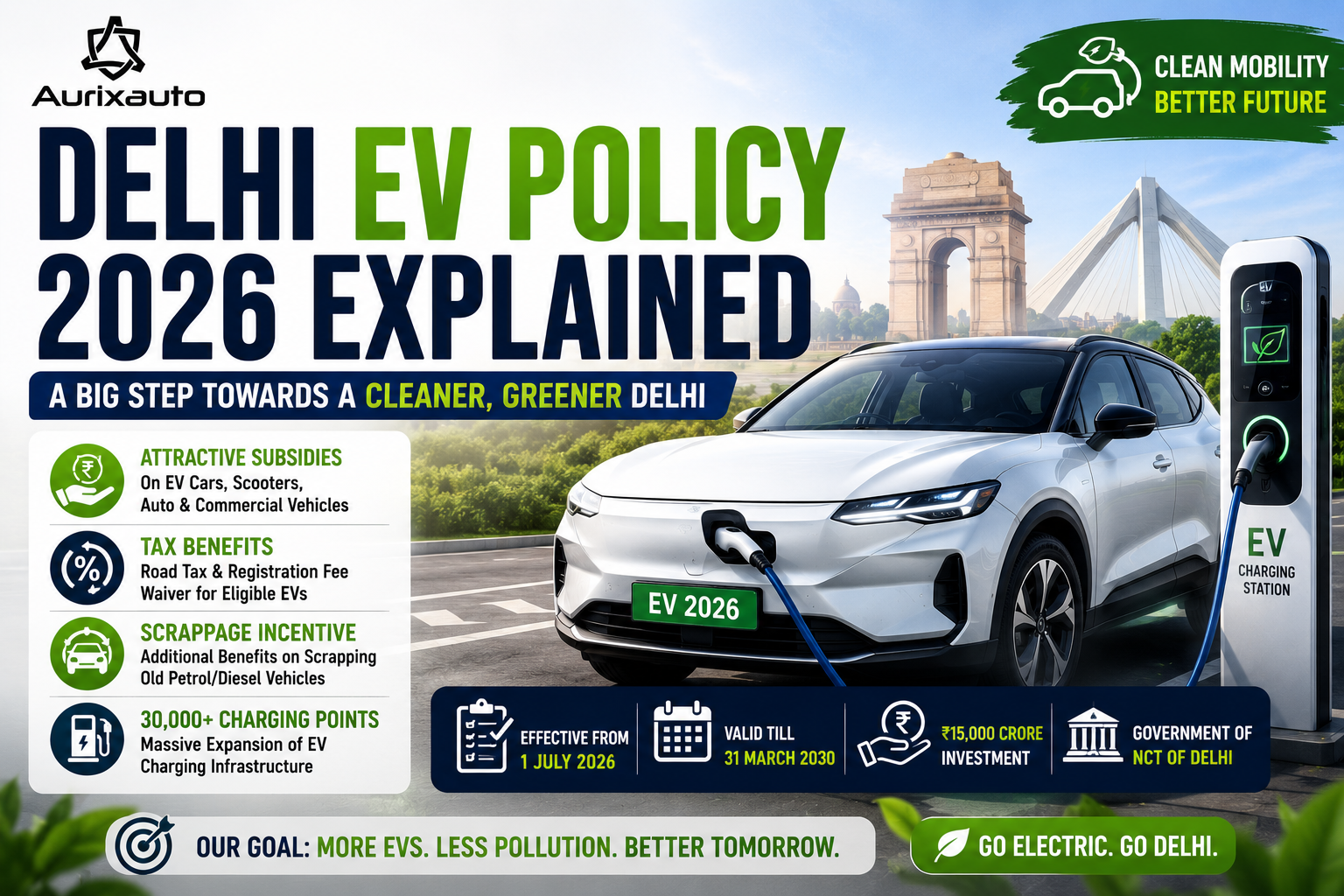
The Delhi Government has officially introduced the Delhi EV Policy 2026, a comprehensive roadmap aimed at making electric vehicles more affordable, reducing air pollution, and accelerating the shift towards clean mobility. The policy came into effect on 1 July 2026 and is expected to remain in force until 31 March 2030.

With tax exemptions, purchase incentives for several EV categories, scrappage benefits, and a major expansion of charging infrastructure, the policy is designed to encourage more people and businesses to switch from petrol and diesel vehicles to electric mobility.
What is the Delhi EV Policy 2026?
The Delhi EV Policy 2026 is the latest electric vehicle policy introduced by the Government of Delhi to increase EV adoption across the National Capital Territory.
The government has announced an investment of nearly ₹15,000 crore over the next four years to strengthen the EV ecosystem, expand public charging infrastructure, and encourage cleaner transportation. :contentReference[oaicite:0]{index=0}
Key Highlights of Delhi EV Policy 2026
- Policy effective from 1 July 2026.
- Valid until 31 March 2030.
- ₹15,000 crore investment planned.
- Target of installing around 30,000 public EV charging points.
- Road tax exemption for eligible electric vehicles.
- Registration fee waiver on eligible EVs.
- Purchase incentives for electric two-wheelers, three-wheelers and selected commercial EVs.
- Scrappage incentive for eligible old vehicles replaced with EVs.
- Direct Benefit Transfer (DBT) system for eligible incentives.
Who Will Benefit?
The policy is expected to benefit:
- Individual EV buyers
- Families purchasing their first electric car
- Electric scooter buyers
- Commercial fleet operators
- Delivery companies
- Auto-rickshaw owners shifting to electric vehicles
- Businesses investing in clean transportation
EV Purchase Benefits
Electric Cars
Eligible electric cars receive significant relief through road tax and registration fee exemptions. Additional scrappage incentives are available for buyers replacing eligible older vehicles with a new EV, subject to policy conditions. :contentReference[oaicite:1]{index=1}
Electric Two-Wheelers
The policy provides purchase incentives for eligible electric scooters and motorcycles during the initial years of implementation, along with continued tax exemptions. :contentReference[oaicite:2]{index=2}
Electric Three-Wheelers
Electric auto-rickshaws and commercial three-wheelers are also eligible for financial incentives, encouraging commercial operators to transition to zero-emission mobility. :contentReference[oaicite:3]{index=3}
Scrappage Incentive
One of the most attractive features of the new policy is the scrappage incentive.
If you own an eligible older vehicle and replace it with a qualifying electric vehicle, you may receive an additional financial incentive, depending on the vehicle category and eligibility criteria. Incentives are higher for certain commercial vehicles, while eligible private car buyers can receive substantial support when scrapping older vehicles and purchasing a qualifying EV. :contentReference[oaicite:4]{index=4}
Massive Charging Infrastructure Expansion
Range anxiety has been one of the biggest concerns for EV buyers. To address this, the Delhi Government plans to install approximately 30,000 public charging stations across the city.
Charging stations are expected to be developed at:
- Metro stations
- Shopping malls
- Residential colonies
- Commercial complexes
- Parking facilities
- Government buildings
- Public transport hubs
This expansion aims to make EV charging more accessible for daily commuters. :contentReference[oaicite:5]{index=5}
Are Hybrid Cars Eligible?
No.
One of the biggest changes in the final policy is that it focuses on pure battery electric vehicles (BEVs). Hybrid vehicles are not included in the incentive framework under the final approved policy. :contentReference[oaicite:6]{index=6}
Important Conditions
- Some incentive schemes include a minimum ownership (lock-in) period.
- Applications for incentives generally need to be submitted within the specified timelines.
- Only approved vehicle models qualify for incentives.
- Eligibility depends on the final notified guidelines for each vehicle category.
Always check the latest government notification before making your purchase. :contentReference[oaicite:7]{index=7}
Should You Buy an EV in Delhi Now?
If you primarily drive within the city, have access to charging, and were already considering an electric vehicle, the updated policy makes EV ownership more attractive than before.
However, your decision should also depend on:
- Your daily driving distance
- Charging availability at home or office
- Long-term ownership cost
- Battery warranty
- Service network
- Insurance cost
- Resale expectations
Buying a New EV? Don't Skip the Pre-Delivery Inspection (PDI)
Modern electric vehicles contain sophisticated battery systems, software, cameras, sensors, and electronic components.
Before accepting delivery, consider getting a professional Pre-Delivery Inspection (PDI). A detailed inspection can help identify:
- Transit damage
- Paint defects
- Battery health indicators
- Charging equipment verification
- Missing accessories
- Software or warning-light issues
- Tyre manufacturing dates
- Fit-and-finish defects
AurixAuto's expert inspection team helps buyers ensure that their new vehicle is delivered in the condition they expect.
Frequently Asked Questions
When did the Delhi EV Policy 2026 come into effect?
The policy came into effect on 1 July 2026 and is scheduled to remain valid until 31 March 2030. :contentReference[oaicite:8]{index=8}
Does the policy include hybrid vehicles?
No. The approved policy focuses on pure electric vehicles and does not provide incentives for hybrid vehicles. :contentReference[oaicite:9]{index=9}
Will Delhi build more charging stations?
Yes. The government plans to significantly expand charging infrastructure with a target of approximately 30,000 public charging points. :contentReference[oaicite:10]{index=10}
Related Articles
- Top Upcoming Cars Launching in India (2026-2027)
- Clean Mobility Revolution in India
- Complete Car Brand List by Country
- Car Age Limit in India
- Vehicle Recalls in India
- RC Transfer Guide
Final Thoughts
The Delhi EV Policy 2026 is one of the most ambitious clean-mobility initiatives introduced by any Indian state. By combining financial incentives, tax exemptions, scrappage benefits, and major investments in charging infrastructure, the government aims to make electric vehicles a practical choice for everyday commuters and businesses.
If you're planning to buy an EV, take time to compare models, understand the eligibility rules, and verify the latest government notifications before making your decision.
Stay connected with AurixAuto for expert EV buying guides, automobile news, vehicle inspections, ownership tips, and the latest updates from the Indian automotive industry.