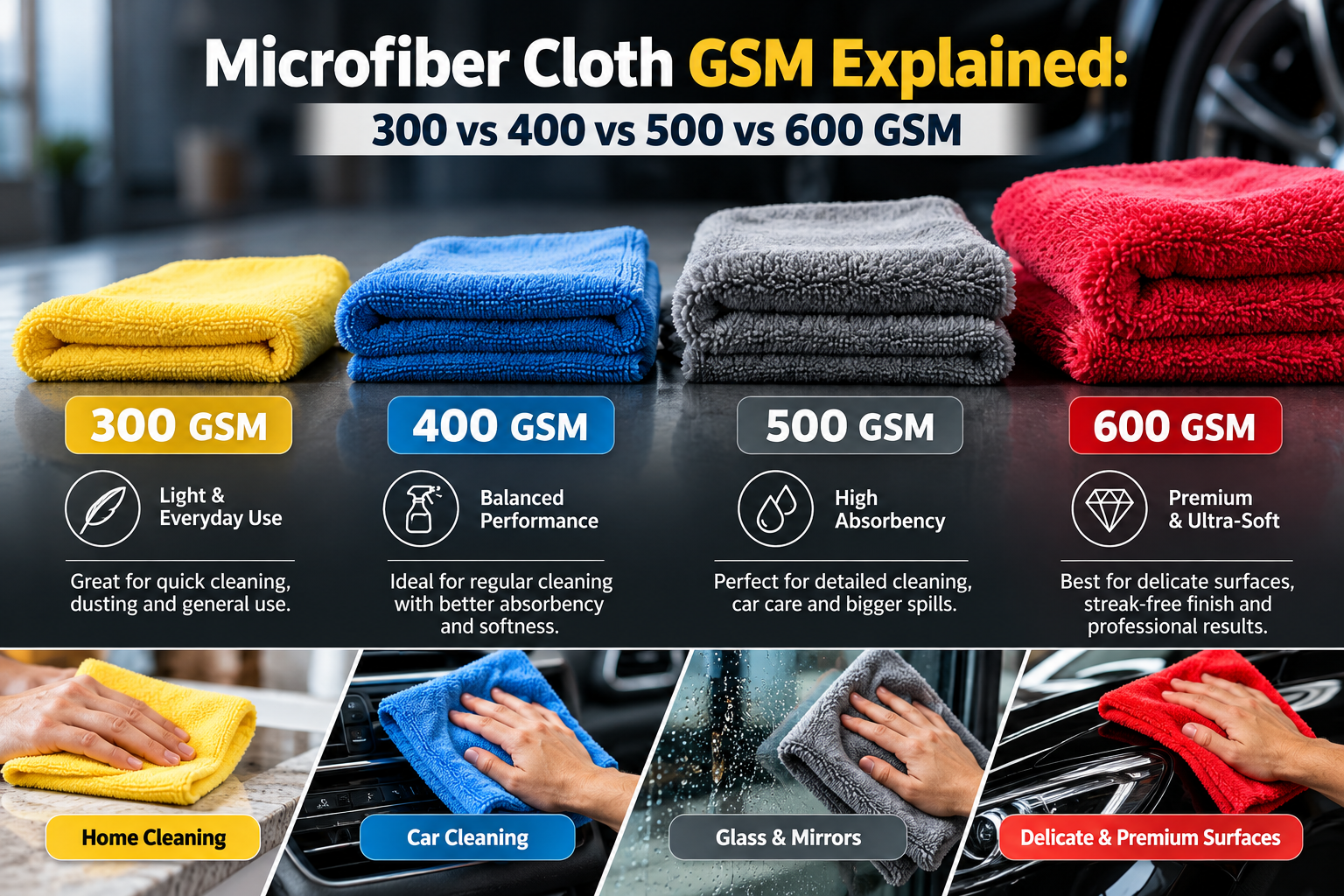
Understand the difference between 300, 400, 500 and 600 GSM microfiber cloths. Discover which GSM is best for car cleaning, drying, detailing, and everyday maintenance
Choosing the right microfiber cloth can make a big difference when cleaning your car. Some cloths work better for removing dust, while others absorb more water and provide a soft finish for car paint. One important factor to consider is GSM. It helps you understand the weight and density of a microfiber cloth.
But is a 600 GSM microfiber towel always better than a 300 GSM cloth? Not necessarily. The right choice depends on your cleaning task, the material quality, and how you plan to use it.
In this microfiber cloth GSM guide, we will explain the difference between 300, 400, 500, and 600 GSM microfiber cloths, their benefits, and which option works best for car cleaning.
What Is GSM in Microfiber Cloth?
GSM stands for Grams per Square Metre. It measures the weight of fabric per square metre and helps indicate how thick or dense a microfiber cloth may feel.
For example, a 300 GSM microfiber cloth weighs approximately 300 grams per square metre of fabric, while a 600 GSM cloth weighs around 600 grams per square metre.
However, GSM alone does not determine cleaning performance. Fibre quality, weave pattern, pile length, and stitching also affect softness, absorbency, and durability.
Why Does Microfiber Cloth GSM Matter?
Absorbency: Higher GSM towels often hold more water, depending on their construction.
Softness: Thick, plush towels can feel softer against delicate car paint.
Cleaning performance: Different GSM levels suit different cleaning tasks.
Drying efficiency: A suitable towel can help dry your car faster.
Cost: Higher GSM towels may cost more because they use more fabric.
300 vs 400 GSM Microfiber Cloth: What Is the Difference?
The main difference between 300 and 400 GSM microfiber cloths is their weight, thickness, and typical use. Both are useful for car care, but they serve slightly different purposes.
300 GSM Microfiber Cloth
A 300 GSM cloth is generally lightweight and easy to handle. It works well for everyday cleaning and quick detailing tasks.
Best uses:
Cleaning dashboards and interior plastic surfaces.
Removing dust and light dirt.
Wiping door panels and centre consoles.
Applying interior cleaning products.
General household cleaning.
Its lighter construction makes it convenient for regular use. However, it may hold less water than a thicker towel of similar quality and size.
400 GSM Microfiber Cloth
A 400 GSM microfiber cloth offers a useful balance between thickness, absorbency, and ease of handling. It can work well for several exterior and interior cleaning tasks.
Best uses:
Wiping car body panels after washing.
Removing light polish or wax residue, if the weave suits the product.
General exterior detailing.
Cleaning glass with an appropriate low-lint weave.
Routine car maintenance.
Which one should you choose? Choose 300 GSM for everyday wiping and lighter cleaning jobs. Consider 400 GSM when you need a slightly heavier, more versatile cloth for regular car care.
400 vs 500 GSM Microfiber Towel: Which Is Better?
When comparing a 400 vs 500 GSM microfiber towel, the 500 GSM option is generally heavier and can provide a plusher feel. It may also absorb more water, depending on its fibre construction and weave.
A 400 GSM towel is usually easier to handle for general wiping, while a 500 GSM towel can be a better choice for tasks that need extra softness and water absorption.
Benefits of a 500 GSM Microfiber Towel
Provides a thicker feel than many 400 GSM towels.
Can absorb more water when designed for drying.
Offers a plush surface for suitable paint-safe detailing tasks.
Works well for drying smaller panels and wiping selected exterior surfaces.
Can help remove light residue when paired with the right weave.
However, a higher GSM towel is not automatically safer for paint. Always use a clean cloth and avoid wiping grit across the surface.
500 vs 600 GSM Microfiber Cloth: Which Should You Buy?
The comparison between 500 vs 600 GSM microfiber cloth mainly comes down to thickness, handling, and the intended cleaning job.
A 500 GSM towel often offers a practical balance of plushness and control. A 600 GSM towel is usually heavier and may provide greater water-holding capacity when both towels have similar materials and construction.
500 GSM Microfiber Cloth
A 500 GSM cloth is suitable for people who regularly wash and maintain their cars. It offers a good balance of softness and usability.
Recommended uses:
Drying smaller exterior sections.
Wiping suitable wax or detailing product residue.
General paint care with a suitable plush weave.
Cleaning selected glossy surfaces.
600 GSM Microfiber Cloth
A 600 GSM microfiber towel is often chosen for its thick, plush construction. It can be useful for drying and finishing tasks where extra softness and absorbency matter.
Recommended uses:
Drying car panels with a purpose-built drying towel.
Detailing delicate exterior surfaces with appropriate technique.
Final buffing when the towel's weave suits the product.
Absorbing water from smaller areas.
Keep in mind that a thick towel can be bulkier and may take longer to dry after washing. For large vehicles, a well-designed drying towel may perform better than a smaller, heavier cloth.
Microfiber Cloth GSM Comparison Table
| GSM |
Typical feel |
Best use |
| 300 GSM |
Lightweight |
Dusting and interior cleaning |
| 400 GSM |
Medium weight |
Everyday car detailing |
| 500 GSM |
Plush and thicker |
Drying and paint-care tasks |
| 600 GSM |
Thick and plush |
Absorbent drying and finishing |
What Is the Best GSM for Microfiber Cloth?
The best GSM for microfiber cloth depends on what you want to clean. There is no single GSM that works best for every surface.
Choose GSM According to Your Cleaning Needs
For car interiors: 250–350 GSM is a practical starting range for routine dusting and wiping.
For general car cleaning: 300–400 GSM offers a useful balance of handling and versatility.
For exterior detailing: 400–500 GSM can be suitable when the weave and softness match the task.
For car drying: 500–600 GSM can be a good option, especially for plush drying towels.
For glass cleaning: Choose a low-lint, glass-specific weave rather than relying on GSM alone.
These ranges are general guidelines, not strict rules. A well-made 350 GSM towel can outperform a poorly constructed 600 GSM towel for a particular job.
Best Microfiber Cloth for Car Cleaning: What Should You Check?
Before buying a microfiber cloth for car cleaning, check more than the GSM number. The right combination of material, construction, and care will help you get better results.
Important Features to Consider
Material quality: Look for quality microfiber that feels soft and has consistent fibres.
Weave type: Short-pile, waffle-weave, and plush towels serve different purposes.
Edge design: Soft or edgeless construction can reduce the risk of scratching delicate surfaces.
Absorbency: Choose a purpose-built drying towel for removing water after a wash.
Lint control: Use a glass-specific cloth for windows and mirrors.
Size: A larger towel can cover more area, but it should remain easy to handle.
For regular car maintenance, you can explore car-care products from
AurixAuto and compare cloth features before choosing the right option for your needs.
High GSM Microfiber Towel Benefits
High GSM microfiber towels offer several advantages when their construction suits the cleaning task.
Key Benefits
Better water capacity: Plush, dense towels can hold more water than comparable lighter towels.
Soft touch: A suitable high-pile towel can provide a soft surface for paint-safe drying.
Useful for finishing: Some high GSM towels work well for removing compatible detailing product residue.
Comfortable handling: Thicker towels can feel more substantial and easier to grip.
There are some limitations too. High GSM towels may cost more, require more time to dry, and feel bulky when working around tight spaces. For windows and routine dashboard cleaning, a lighter specialised cloth may be more effective.
How to Maintain Your Microfiber Cloth
Even the best microfiber towel can damage a surface if you do not maintain it properly. Dirt, grit, and trapped particles can create scratches during wiping.
Simple Care Tips
Wash microfiber cloths separately from cotton towels.
Use a mild detergent and avoid fabric softener.
Avoid bleach unless the manufacturer specifically permits it.
Follow the care label for water temperature and drying instructions.
Keep glass, wheel, interior, and paint-care towels separate.
Replace cloths that become rough, damaged, or heavily contaminated.
Frequently Asked Questions
Is 600 GSM better than 300 GSM?
Not always. A 600 GSM towel is generally heavier and may absorb more water, but a 300 GSM cloth can be better for dusting, interior cleaning, and tasks that require more control.
Is 400 GSM good for car cleaning?
Yes. A 400 GSM microfiber cloth can be a versatile option for regular car cleaning, provided its weave and material suit the surface.
Which GSM microfiber towel is best for drying a car?
A 500–600 GSM towel can be a good starting point for car drying. However, towel size, pile, weave, and water absorption also matter.
Does higher GSM mean better quality?
No. GSM measures fabric weight per square metre, not overall quality. Fibre quality, weave, stitching, and durability also affect performance.
Understanding microfiber cloth GSM helps you choose the right towel for your car-care routine. A 300 GSM cloth works well for everyday cleaning, while 400 GSM offers greater versatility. A 500 GSM towel provides a plush option for many detailing tasks, and a 600 GSM towel may suit drying and finishing when its construction matches the job.
Instead of choosing the highest GSM available, focus on the surface you want to clean and the towel's material, weave, and absorbency. The right microfiber cloth will make car cleaning easier and help you maintain your vehicle's finish with proper care.