
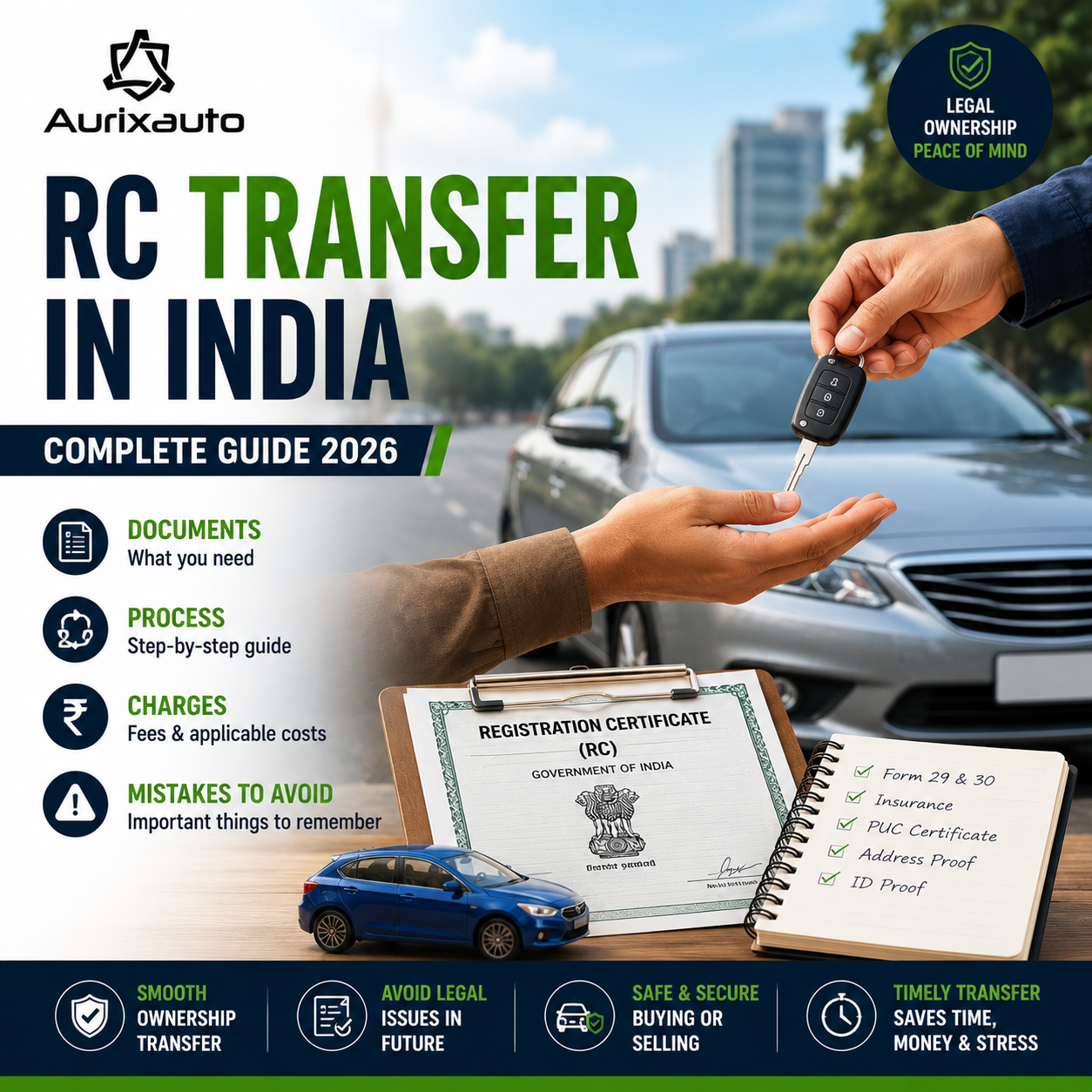
Buying or Selling a Used Car? Don't Ignore the RC Transfer
Buying a used car can save you a lot of money, but there's one step that many buyers overlook—the Registration Certificate (RC) Transfer. Until the RC is officially transferred to the new owner's name, the previous owner remains legally responsible for the vehicle.
Whether you're purchasing a second-hand car from an individual, a dealer, or through an online marketplace, completing the RC transfer should be your top priority.

In this guide, we'll explain the RC transfer process in simple language so you know exactly what to do.
What is an RC Transfer?
The Registration Certificate (RC) is the official proof of ownership of a vehicle. When a vehicle is sold, the ownership must be updated in the records of the Regional Transport Office (RTO).
This process is called RC Transfer. Once completed, the buyer becomes the legal owner of the vehicle.
Why is RC Transfer Important?
Imagine selling your car but not transferring the ownership. If the new owner violates traffic rules, meets with an accident, or commits an offence, the notices may still come to you because the vehicle is registered in your name.
Similarly, if you're buying a used car without getting the RC transferred, you may face difficulties while renewing insurance, claiming ownership, or selling the car in the future.
In short, RC transfer protects both the buyer and the seller.
Documents Required for RC Transfer
- Original Registration Certificate (RC)
- Valid Vehicle Insurance Certificate
- PUC (Pollution Under Control) Certificate
- Address Proof of Buyer
- Identity Proof of Buyer
- PAN Card (where applicable)
- Passport-size photographs
- Signed Forms 29 & 30
- No Objection Certificate (NOC), if the vehicle is transferred to another state
- Loan NOC from the financer (if the vehicle was financed)
RC Transfer Process
Step 1: Verify the Vehicle
Before making payment, verify the vehicle's documents, service history, insurance, challans, accident history, and ownership details.
Step 2: Sign the Required Forms
The buyer and seller must complete and sign the prescribed RTO forms, including Form 29 and Form 30.
Step 3: Submit Documents at the RTO
The required documents are submitted to the concerned RTO or through the state's online vehicle service portal, wherever available.
Step 4: Pay the Applicable Fees
The RTO charges a nominal transfer fee. Additional charges may apply for hypothecation removal, NOC, or smart card issuance.
Step 5: Receive the Updated RC
After verification, the RTO updates the ownership details and issues a new Registration Certificate in the buyer's name.
How Long Does RC Transfer Take?
The processing time varies from one state to another. In most cases, the RC transfer is completed within 2 to 6 weeks, depending on document verification and the workload at the RTO.
Common Mistakes People Make
- Buying a vehicle without checking pending traffic challans.
- Ignoring loan or hypothecation status.
- Delaying the RC transfer after purchasing the vehicle.
- Not verifying insurance validity.
- Purchasing a vehicle without checking accidental damage.
- Failing to verify the chassis and engine numbers.
Buying a Used Car? Get It Inspected First
Paperwork tells only part of the story. A vehicle may look perfect from the outside but could have hidden accident damage, engine issues, flood damage, or expensive mechanical problems.
Before completing the RC transfer, it's always a good idea to get a professional vehicle inspection. An expert inspection can help you understand the actual condition of the vehicle and avoid costly surprises after purchase.
Can RC Transfer Be Done Online?
Many states now offer online services through their transport portals for initiating the RC transfer process. However, depending on the state and vehicle type, physical verification or document submission at the RTO may still be required.
Final Thoughts
An RC transfer is much more than a paperwork formality—it's the legal transfer of ownership. Whether you're buying your first used car or selling your old one, completing the transfer on time protects both parties and prevents future legal or financial issues.
Before signing the deal, verify the vehicle thoroughly, complete all documentation correctly, and never skip a professional inspection. A little caution today can save you from major headaches tomorrow.
At AurixAuto, we're committed to helping car owners make informed decisions with expert guides, vehicle inspections, and reliable automotive information.