
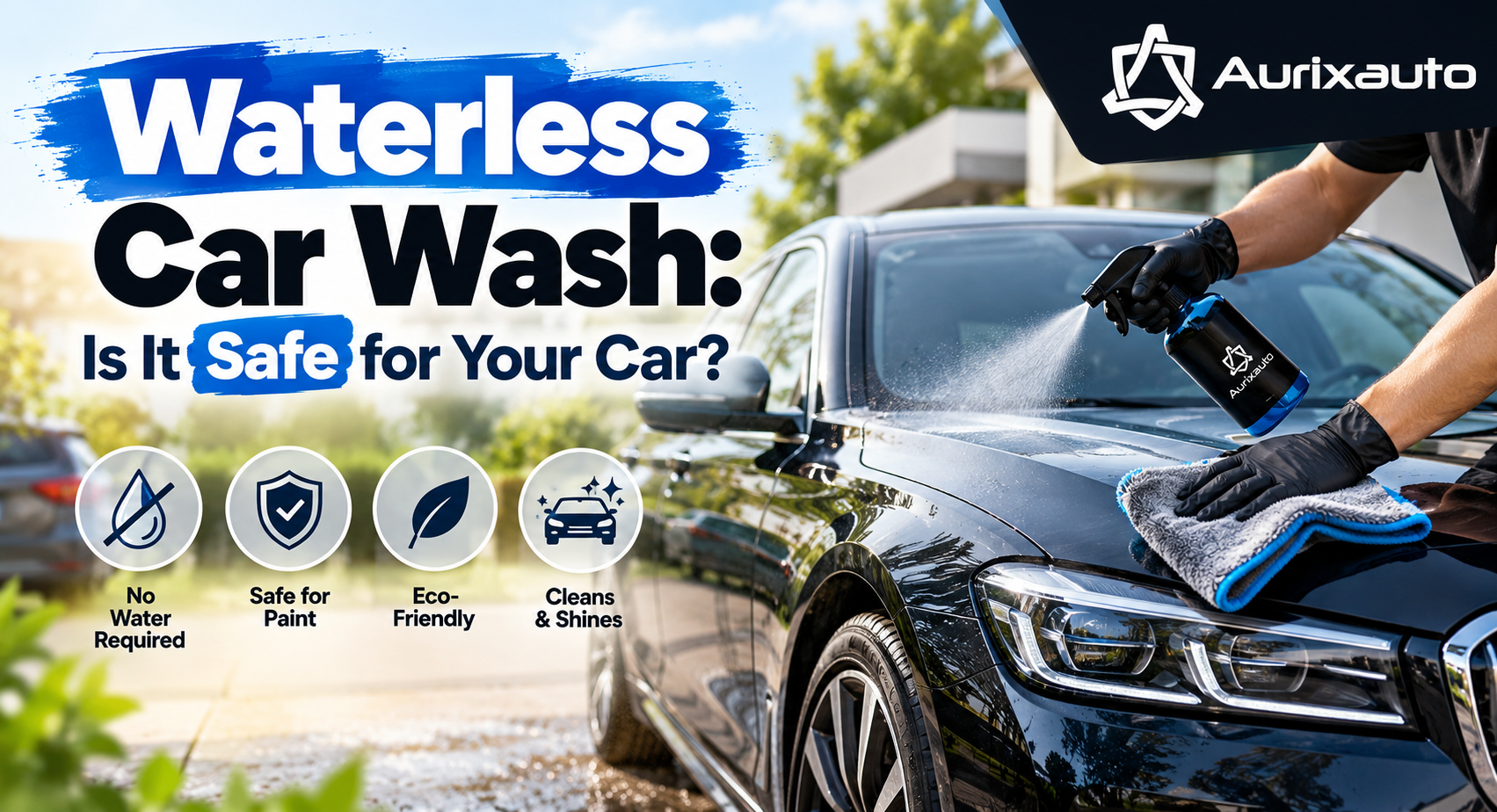
Waterless Car Wash: Is It Safe for Your Car?
Keeping your car clean is important for maintaining its appearance and protecting its paint. But washing a car with water is not always convenient, especially when you live in an apartment, have limited water supply, or want to clean your vehicle quickly. This is where a waterless car wash can be useful.
A waterless car wash uses a specially formulated cleaning spray and microfiber towels to remove light dust, fingerprints, and road grime without using a bucket or hose. But one common question car owners ask is, is waterless car wash safe for cars?

The answer is yes, when you use the right products and follow the correct cleaning method. However, waterless cleaning is not suitable for every situation. Let's understand how it works, its benefits and disadvantages, and how to use it safely without damaging your car's paint.
What Is a Waterless Car Wash?
A waterless car wash is a cleaning method that uses a specialised spray to loosen light dirt and help lift it from the vehicle's surface. Instead of rinsing the car with water, you wipe the surface gently using clean microfiber towels.
Most waterless car wash products contain lubricating agents that help reduce friction between the towel and the paint. Some products also leave behind a glossy finish or a protective layer, depending on their formulation.
How Does Waterless Car Cleaning Work?
- Step 1: Spray the waterless cleaning solution onto a small section of the car.
- Step 2: Allow the product to work according to the manufacturer's instructions.
- Step 3: Use a clean microfiber towel to wipe gently in straight lines.
- Step 4: Turn the towel to a clean side as it collects dirt.
- Step 5: Use another clean microfiber towel to buff the surface if the product requires it.
This method can save time and water, but it only works safely when the car has light dirt and you use enough cleaning solution and clean towels.
Is Waterless Car Wash Safe for Cars?
Yes, a waterless car wash can be safe for car paint when you use a quality product designed for automotive surfaces. Its lubricating formula helps lift light dirt and reduces direct friction during wiping.
However, no waterless car wash spray can make heavy dirt completely risk-free to wipe away. Mud, sand, thick dust, and gritty road deposits can scratch the clear coat if you rub them against the paint.
When Is a Waterless Car Wash Safe?
- Your car has a light layer of dust or fingerprints.
- The paint does not have thick mud or gritty deposits.
- You use a suitable automotive cleaning spray.
- You use soft, clean, high-quality microfiber towels.
- You avoid excessive pressure while wiping the surface.
For cars covered in heavy dirt, dried mud, sand, or road salt, choose a traditional wash with an appropriate rinse or pre-wash stage before touching the paint.
Benefits of Waterless Car Wash
Waterless car cleaning offers several advantages for people who want to maintain their vehicles with less effort. Here are some of the main benefits of waterless car wash products.
1. Saves Water
A waterless car wash uses significantly less water than a typical hose-based wash. This makes it a useful option in places where water conservation matters. However, the actual water savings depend on the product, towel washing, and cleaning method.
2. Convenient and Time-Saving
You can clean a lightly dusty car without arranging a washing area, filling buckets, or connecting a hose. It is particularly useful for apartment residents and people with busy schedules.
3. Helps Maintain Car Appearance
Regularly removing light dust and fingerprints helps keep your vehicle looking clean. Some waterless formulas also provide gloss or short-term surface protection, depending on the product.
4. Easy to Store and Carry
Most waterless car wash sprays and microfiber towels fit easily in a car-care kit. You can keep them in your garage or carry them for quick cleaning when needed.
Waterless Car Wash Disadvantages You Should Know
Although this cleaning method is convenient, it also has limitations. Understanding the waterless car wash disadvantages will help you decide when to use it.
- Not suitable for heavy dirt: Thick mud and gritty deposits can scratch the paint during wiping.
- Requires more microfiber towels: Reusing a dirty towel can spread abrasive particles across the surface.
- Product cost: Regular use of cleaning sprays and replacement towels can increase maintenance expenses.
- Needs careful technique: Applying too little product or pressing too hard can cause swirl marks.
- May leave residue: Incorrect application or excessive product can leave streaks, especially on glass and dark paint.
For these reasons, waterless cleaning should complement your regular car-washing routine rather than replace every traditional wash.
Waterless Car Wash vs Traditional Car Wash
Both cleaning methods can maintain your car's appearance, but they serve different purposes.
| Feature | Waterless Car Wash | Traditional Car Wash |
|---|---|---|
| Water usage | Very low during cleaning | Usually higher |
| Best for | Light dust and fingerprints | Light to heavy dirt, depending on the wash process |
| Equipment | Cleaning spray and microfiber towels | Water, shampoo and washing tools |
| Convenience | Quick and easy for light cleaning | Needs more setup and drying |
| Paint safety | Safe with correct technique and light dirt | Safe when performed with proper washing methods |
If your car has only a little dust, waterless cleaning can be a convenient choice. If it has mud, sand, or heavy road grime, a traditional wash with a thorough pre-rinse is generally the better option.
How to Wash a Car Without Water Safely
Follow these simple steps to reduce the risk of damaging your car's paint during waterless cleaning.
1. Park in a Shaded Area
Clean your car away from direct sunlight. A hot surface can cause the spray to dry quickly and leave streaks.
2. Check the Dirt Level
Inspect the bodywork before spraying. If you notice thick mud, sand, or gritty deposits, do not wipe them directly. Rinse the car first.
3. Use Enough Waterless Car Wash Spray
Apply the product generously according to its instructions. Proper lubrication helps reduce friction as you remove light dirt.
4. Choose Clean Microfiber Towels
Use soft automotive microfiber towels and switch to a fresh towel as soon as one becomes dirty. Avoid using rough cloths or towels that have collected grit.
5. Work in Small Sections
Clean one panel at a time using gentle, straight-line movements. Avoid aggressive circular rubbing, and never force stubborn dirt off the surface.
How to Choose the Best Waterless Car Wash Products
The best waterless car wash products are those that suit your car's paint, your cleaning needs, and the amount of dirt you usually deal with.
- Choose a product specifically formulated for automotive exterior surfaces.
- Check the label for paint compatibility and application instructions.
- Look for a formula with suitable cleaning and lubricating properties.
- Choose clean, soft microfiber towels with good dirt-holding ability.
- Avoid using household cleaners or unapproved chemicals on your car's paint.
- Read customer feedback, but also check the manufacturer's directions and product details.
You can explore car-care accessories and cleaning solutions through AurixAuto to find options that suit your car-maintenance routine. Always check the product specifications before purchasing.
Frequently Asked Questions (FAQs)
1. Can a waterless car wash damage car paint?
Yes, it can cause scratches if you wipe heavy dirt or grit across the paint. Using a suitable spray, clean microfiber towels, and gentle technique reduces the risk.
2. How often can I use a waterless car wash?
You can use it whenever your car has light dust or fingerprints, provided the surface is suitable for waterless cleaning. Use a traditional wash when dirt builds up heavily.
3. Is a waterless car wash safe for car paint protection coatings?
Many products are compatible with wax, sealants, or ceramic coatings, but compatibility varies. Check the manufacturer's instructions before applying a product to a protected surface.
4. Can I use a waterless car wash on glass and wheels?
Only use the product on these surfaces if its label allows it. Wheels can collect abrasive brake dust, so heavily contaminated wheels generally need a dedicated cleaner and suitable rinsing method.
Conclusion
A waterless car wash is a convenient way to clean light dust, fingerprints, and minor surface dirt while reducing water use. When you choose suitable waterless car wash products and follow the correct technique, you can maintain your car's appearance without unnecessary risk to its paint.
However, avoid wiping away heavy mud, sand, or gritty grime without rinsing first. For the best results, combine waterless car cleaning with traditional washing whenever your vehicle needs a deeper clean.
Final tip: Use waterless cleaning for light maintenance, traditional washing for heavy dirt, and clean microfiber towels every time. This simple approach helps keep your car looking its best.