
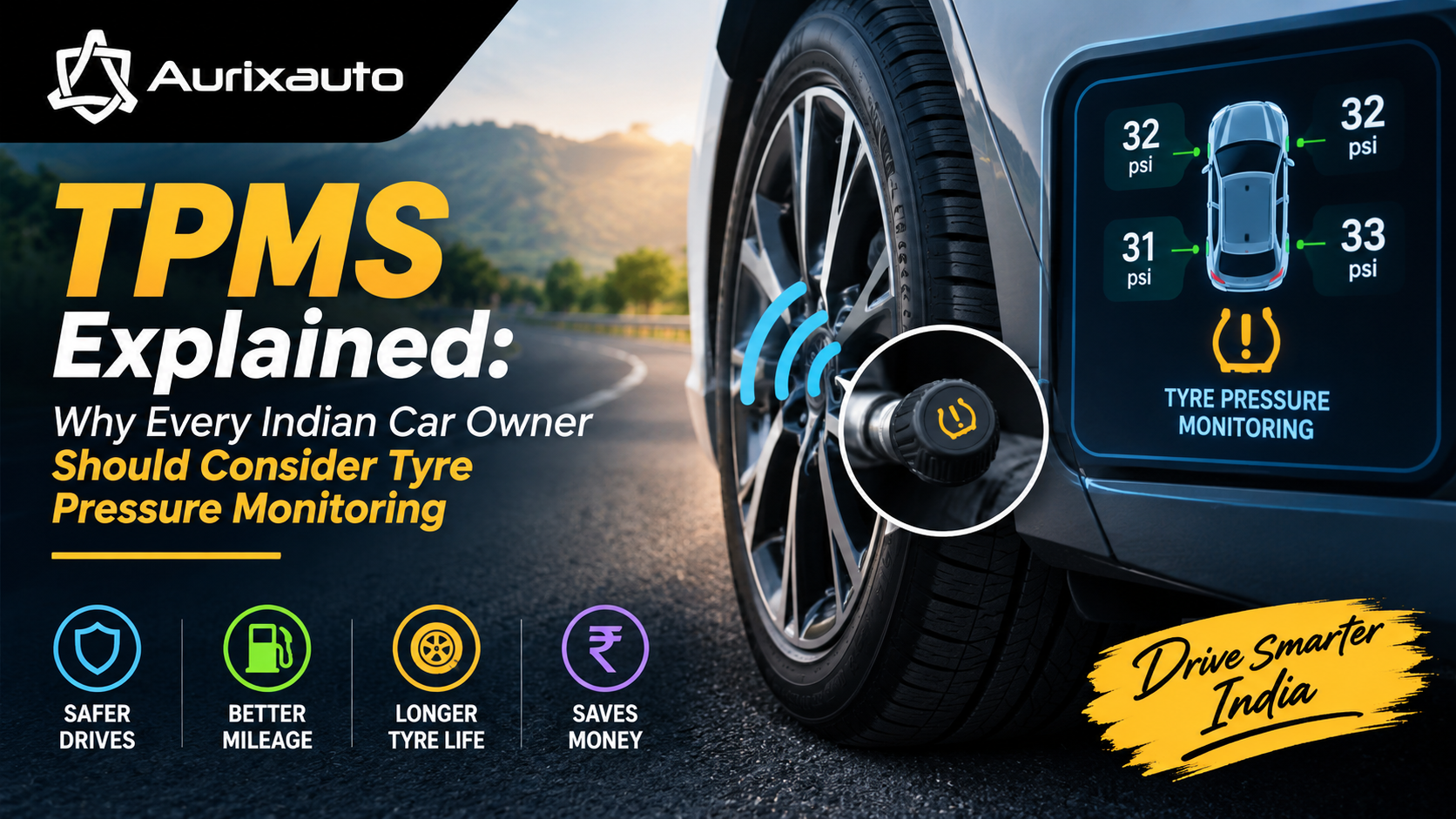
TPMS Explained: Why Every Indian Car Owner Should Consider Tyre Pressure Monitoring
Tyre pressure is one of the most important factors affecting your car’s safety, fuel efficiency, braking performance and overall driving comfort. Yet, many Indian car owners do not check their tyre pressure regularly. A tyre can look perfectly normal from the outside and still have incorrect air pressure.
This is where TPMS (Tyre Pressure Monitoring System) becomes useful. TPMS is a safety system that monitors the air pressure inside your car's tyres and alerts you when the pressure drops below a recommended level. Some advanced systems can also show the pressure of individual tyres in real time.
With long highway journeys, busy city traffic, potholes, changing weather conditions and varying road surfaces across India, knowing your tyre pressure can make a significant difference. In this guide, we explain what TPMS is, how it works, its benefits, different types of TPMS and why Indian car owners should consider it.
What Is TPMS?
TPMS stands for Tyre Pressure Monitoring System. It is an electronic safety system designed to monitor the air pressure in your vehicle's tyres.
When tyre pressure becomes too low or, in some systems, too high, TPMS provides a warning to the driver. Depending on the vehicle and system, the warning may appear as a tyre-shaped symbol on the instrument cluster, accompanied by an alert message.
Modern TPMS-equipped cars can provide more detailed information, including the approximate pressure in each individual tyre. This makes it easier for the driver to identify which tyre needs attention.
Why Is Correct Tyre Pressure Important?
Tyres are the only parts of your car that maintain direct contact with the road. Their condition and pressure therefore have a major impact on vehicle control.
Driving with incorrect tyre pressure can affect:
- Braking performance
- Cornering and handling
- Ride comfort
- Fuel efficiency
- Tyre lifespan
- Road grip
- Driving stability
An underinflated tyre creates greater rolling resistance. This can make the engine work harder and may increase fuel consumption. It can also generate additional heat, especially during extended highway driving.
On the other hand, excessive tyre pressure can reduce the tyre's contact area with the road and may affect ride comfort and grip. Therefore, maintaining the pressure recommended by the vehicle manufacturer is important.
How Does TPMS Work?
TPMS generally works through sensors and an electronic control system. The exact technology depends on the type of TPMS installed in the vehicle.
There are two main types of tyre pressure monitoring systems:
1. Direct TPMS
Direct TPMS uses physical pressure sensors installed inside or attached to each tyre. These sensors measure the actual air pressure and, in some systems, tyre temperature.
The information is transmitted electronically to the vehicle's monitoring system. If pressure falls below the specified threshold, the driver receives an alert.
Main advantage: Direct TPMS can provide actual pressure readings for individual tyres.
2. Indirect TPMS
Indirect TPMS does not usually measure tyre pressure directly. Instead, it uses information from the vehicle's wheel-speed sensors, which are also used by systems such as ABS.
A tyre with lower pressure can have a slightly different rolling circumference and rotational behaviour compared with properly inflated tyres. The system detects these differences and can warn the driver about a possible pressure issue.
Main advantage: Indirect systems generally do not require a dedicated pressure sensor inside every tyre.
TPMS Warning Light: What Does It Mean?
The TPMS warning light generally looks like a tyre cross-section with an exclamation mark inside it. If this light comes on while driving, it indicates that the system has detected a possible tyre pressure issue.
If the TPMS warning appears, do not simply ignore it. Safely stop at the earliest suitable location and inspect the tyres.
Ideally, check the pressure using a reliable tyre pressure gauge and compare it with the manufacturer's recommended pressure. The recommended pressure is commonly listed on a sticker inside the driver's door area, fuel-filler flap or owner's manual.
If a tyre is visibly damaged, losing air rapidly or appears severely deflated, avoid continuing to drive unnecessarily and seek professional assistance.
Why TPMS Is Useful for Indian Car Owners
Indian driving conditions can be challenging for tyres. From potholes and uneven roads to high-speed expressways and congested urban traffic, tyres experience different types of stress every day.
1. Helps Detect Slow Air Loss
A tyre may lose air gradually because of a small puncture, valve problem, rim issue or other damage. Because the pressure reduction may be slow, a driver might not notice it visually.
TPMS can provide an early warning, allowing you to investigate the problem before the tyre becomes dangerously underinflated.
2. Useful During Long Highway Trips
Many Indian motorists regularly travel long distances by car. Highway journeys involve extended periods of driving at relatively high speeds, making tyre condition particularly important.
Checking tyre pressure before a long trip is essential, while TPMS provides an additional layer of monitoring during the journey.
3. Helps Reduce Unnecessary Tyre Wear
Incorrect tyre pressure can contribute to uneven or accelerated tyre wear. Maintaining the correct pressure helps the tyre maintain its intended contact with the road.
TPMS can remind you to investigate pressure changes before they contribute to long-term tyre problems.
4. Can Support Better Fuel Efficiency
Underinflated tyres can increase rolling resistance. When rolling resistance increases, the vehicle may require more energy to move.
While TPMS itself does not improve fuel economy, it can help drivers identify low tyre pressure and maintain the recommended pressure, which can support efficient driving.
5. Improves Driver Awareness
One of the biggest advantages of TPMS is information. Instead of relying only on a visual inspection, the driver receives an electronic warning when the system detects a pressure issue.
This can be particularly helpful for drivers who do not regularly inspect their tyres manually.
Can TPMS Prevent a Tyre Puncture?
No, TPMS cannot prevent a puncture.
TPMS is a monitoring system, not a tyre repair or protection system. It cannot stop nails, sharp objects, pothole damage or tyre cuts from occurring.
However, TPMS can alert you when tyre pressure changes because of a puncture or leak. Early detection can help you respond before the tyre becomes completely flat or suffers additional damage.
Does TPMS Replace Manual Tyre Pressure Checks?
No. TPMS should be treated as an additional safety feature rather than a replacement for regular tyre maintenance.
You should still manually check tyre pressure using a reliable gauge at regular intervals. This is because TPMS sensors and systems have their own limitations and may not always alert you immediately to every small pressure variation.
It is also important to inspect your tyres for:
- Visible cuts
- Bulges
- Cracks
- Uneven tread wear
- Nails or other embedded objects
- Low tread depth
- Sidewall damage
What Is the Correct Tyre Pressure for Your Car?
There is no single tyre pressure that is correct for every car. The recommended pressure depends on the vehicle, tyre size, load conditions and manufacturer specifications.
Always follow the pressure recommended by your car manufacturer rather than relying on a generic number printed on the tyre.
You can commonly find the recommended pressure information:
- On the driver's side door-frame sticker
- Inside the fuel-filler flap
- In the owner's manual
- Through the manufacturer's official vehicle information
Check tyre pressure when the tyres are cold or have not been driven extensively, unless your vehicle manufacturer specifies otherwise.
TPMS vs Regular Tyre Pressure Gauge
| Feature | TPMS | Manual Pressure Gauge |
|---|---|---|
| Pressure monitoring | Electronic monitoring | Manual measurement |
| Driver alert | Yes, depending on system | No |
| Real-time monitoring | Available with many direct systems | No |
| Requires manual checking | Still recommended | Yes |
| Useful while driving | Yes, depending on system | No |
Should You Install an Aftermarket TPMS?
If your car does not have factory-fitted TPMS, an aftermarket system can be worth considering, particularly if you frequently drive on highways or travel long distances.
Aftermarket TPMS kits generally use sensors that communicate with a display or smartphone-compatible receiver. Depending on the product, sensors may be installed inside the tyre or attached to the tyre valve.
Before purchasing an aftermarket system, consider:
- Sensor accuracy
- Battery life
- Water and dust resistance
- Display readability
- Compatibility with your vehicle
- Sensor installation method
- Availability of replacement sensors
- Installation quality
It is better to choose a reliable system rather than selecting an aftermarket TPMS only because it is inexpensive.
Things to Remember When Using TPMS
TPMS is helpful, but drivers should understand that it is not a substitute for complete tyre care.
- Do not ignore the TPMS warning light.
- Check tyre pressure regularly with a reliable gauge.
- Inspect tyres for visible damage.
- Follow the manufacturer's recommended pressure.
- Check pressure before long highway journeys.
- Do not assume a tyre is healthy just because there is no warning light.
- Check the spare tyre separately if your vehicle has one.
- Have punctures and tyre damage inspected by a qualified professional.
Common TPMS Myths
Myth 1: TPMS means you never need to check tyre pressure
Fact: TPMS is an additional monitoring system. Regular manual checks are still recommended.
Myth 2: TPMS prevents punctures
Fact: TPMS detects pressure changes but cannot prevent physical tyre damage.
Myth 3: A tyre that looks inflated is always safe
Fact: Visual inspection alone cannot accurately determine tyre pressure.
Myth 4: Every TPMS provides exact pressure readings
Fact: Direct TPMS systems can provide individual pressure information, while indirect systems work differently and may not display an actual PSI or bar reading.
How Often Should You Check Tyre Pressure?
As a general maintenance habit, check your tyre pressure regularly and especially before long-distance journeys. You should also check it when you notice changes in handling, after a puncture repair, or when the car has been carrying a different load.
Temperature changes can also influence tyre pressure. Therefore, pressure should be checked periodically rather than only when a tyre looks low.
TPMS and Road Safety: Why It Matters
Tyre-related problems can become serious when a vehicle is driven at high speed or under heavy load. A significant loss of tyre pressure can affect steering response, braking and vehicle stability.
For Indian car owners who regularly deal with potholes, uneven surfaces, heavy traffic and long highway journeys, monitoring tyre pressure should be part of routine vehicle maintenance.
TPMS does not eliminate tyre-related risks, but it can provide useful information and an early warning when pressure changes are detected.
Final Thoughts
TPMS is more than just another dashboard feature. It is a useful safety technology that helps drivers stay aware of tyre pressure and respond to potential problems sooner.
Whether your car already comes with factory-fitted TPMS or you are considering an aftermarket system, the key objective is the same: maintain the correct tyre pressure and keep your tyres in good condition.
For Indian car owners, especially those who frequently travel on highways, carry passengers or luggage, or drive long distances, tyre pressure monitoring can provide an extra level of awareness and convenience.
However, remember that TPMS works best when combined with regular tyre inspections, correct inflation, timely puncture repairs, wheel alignment checks and responsible driving.
Frequently Asked Questions (FAQs)
What does TPMS stand for?
TPMS stands for Tyre Pressure Monitoring System. It monitors tyre pressure and alerts the driver when the system detects a pressure problem.
Is TPMS important for Indian cars?
Yes. TPMS can be particularly useful in India because vehicles frequently encounter potholes, uneven roads, heavy traffic and long highway journeys. It provides an additional way to monitor tyre pressure.
Can TPMS detect a puncture?
TPMS may detect the resulting loss of tyre pressure caused by a puncture or leak, but it does not physically identify or repair the puncture.
Can I drive with the TPMS warning light on?
If the TPMS warning light appears, check your tyre pressure as soon as it is safe to do so. If a tyre appears damaged or severely deflated, avoid driving unnecessarily and seek professional assistance.
Does TPMS improve mileage?
TPMS itself does not increase fuel economy. However, it can help identify underinflated tyres. Maintaining the manufacturer's recommended tyre pressure can help reduce unnecessary rolling resistance and support better fuel efficiency.
Is aftermarket TPMS worth installing?
An aftermarket TPMS can be useful if your car does not have a factory-fitted system, particularly if you frequently travel long distances. Choose a reliable system and ensure it is installed correctly.
Does TPMS replace a tyre pressure gauge?
No. Drivers should continue checking tyre pressure manually at regular intervals, even when the vehicle is equipped with TPMS.