
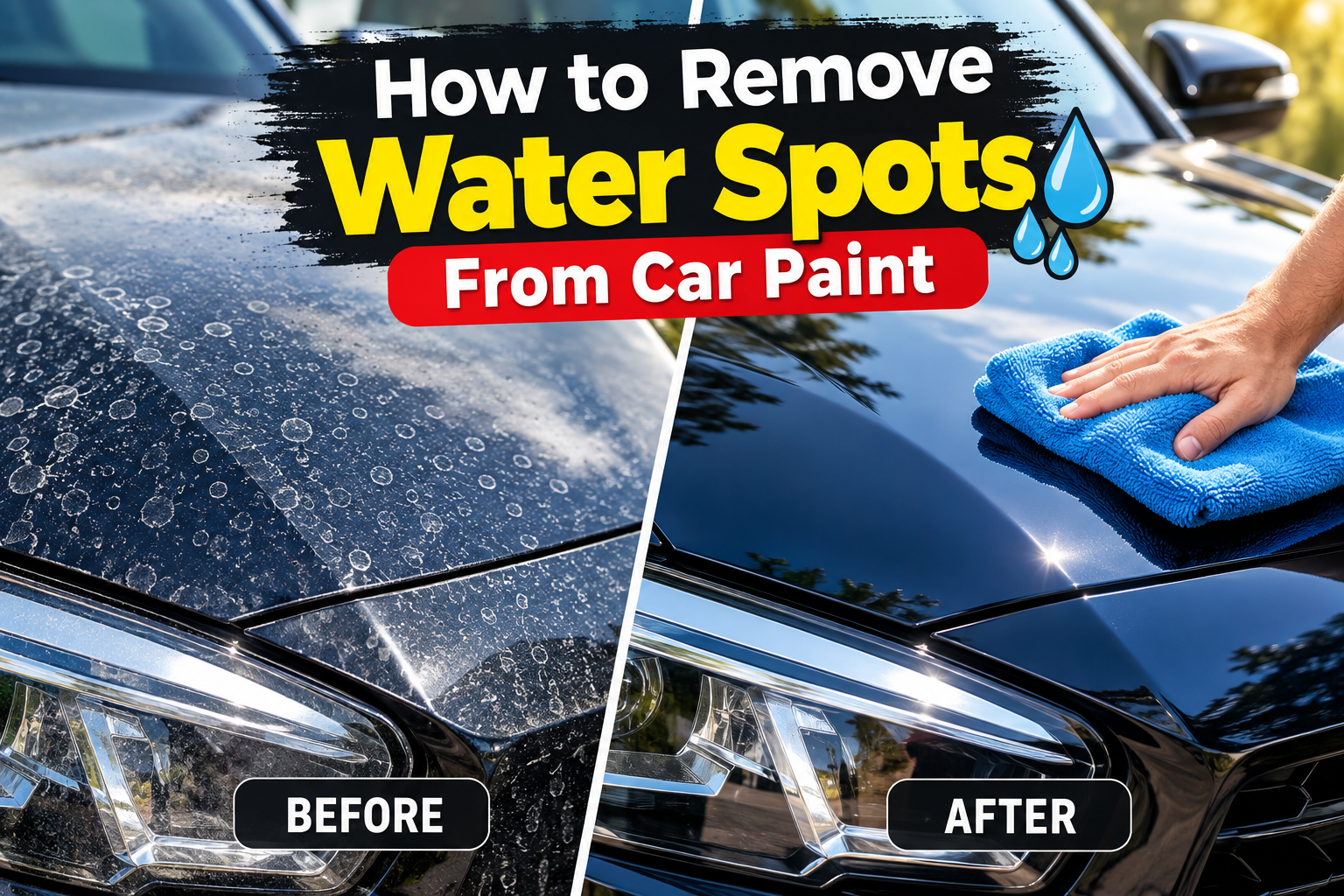
How to Remove Water Spots From Car Paint
Water spots on car paint are a common problem, especially after rain, washing, or parking the car under sprinklers. When water dries on the surface, it can leave behind minerals, dust, and other deposits. Over time, these marks can become difficult to remove and may affect the shine of your car.
The good news is that most fresh water spots can be removed with simple car cleaning methods. However, stubborn or etched water spots may need polishing or professional detailing. This guide explains how to remove water spots from car paint safely and how to prevent them from coming back.
What Are Water Spots on Car Paint?
Water spots are visible marks left behind when water evaporates from a car's painted surface. The water may contain minerals such as calcium and magnesium. When the water dries, these minerals remain on the paint and create white, cloudy, or circular spots.
Water spots can come from rainwater, hard water, car washing, sprinklers, or water that is allowed to dry naturally on the vehicle.
Why Should You Remove Water Spots Quickly?
Fresh water spots are usually easier to clean. If they remain on the paint for a long time, mineral deposits can bond more strongly with the clear coat. In severe cases, acidic contaminants in rainwater or mineral deposits can etch the clear coat.
- They reduce the shine of the paint.
- They can make the surface look dull or cloudy.
- Old deposits may become difficult to clean.
- Severe water spots can damage or etch the clear coat.
How to Remove Water Spots From Car Paint
1. Wash the Car First
Before treating water spots, wash the car properly. Use a pH-balanced car shampoo and clean water. Avoid household dishwashing liquids because they may remove protective layers from the paint.
Start from the top of the vehicle and work downward. Use a clean microfiber wash mitt to reduce the risk of scratching the surface.
2. Dry the Car Properly
Do not allow the car to air dry after washing. Use a clean, soft microfiber drying towel and gently remove the water from the surface.
Pressing or dragging a dirty towel across the paint can create fine scratches. Use a separate towel for the wheels and lower body panels.
3. Try a Water Spot Remover
For light mineral deposits, a dedicated automotive water spot remover can be useful. Apply the product according to the manufacturer's instructions. Work on a small section at a time and wipe it with a clean microfiber towel.
Always test the product on a small, less visible area before treating the entire car.
4. Use a Mild Vinegar Solution for Light Spots
For minor fresh water spots, a diluted white vinegar solution may help dissolve mineral deposits. Mix a small amount of white vinegar with water, apply it to the affected area, and gently wipe it away.
Do not leave vinegar sitting on the paint for a long period. After treatment, rinse the area thoroughly with clean water and dry it properly.
5. Use a Clay Bar for Stubborn Surface Contamination
If washing and a water spot remover do not completely clean the surface, a clay bar can help remove bonded contaminants from the clear coat.
Use plenty of clay lubricant and move the clay gently across the surface. Do not use a clay bar on dry paint because it can create marks.
6. Polish the Paint for Etched Water Spots
Some old water spots are not simply sitting on top of the paint. They may have etched into the clear coat. In this situation, cleaning alone may not work.
A suitable automotive polish can help reduce the appearance of light etching. For deeper marks, machine polishing may be required. If you are inexperienced with paint correction, professional detailing is safer than aggressive polishing at home.
What Not to Use on Car Paint
Using harsh household cleaners or abrasive materials can cause more damage than the water spots themselves.
- Do not use rough scrubbers or abrasive sponges.
- Do not scrape mineral deposits with a blade.
- Do not use strong household chemicals without checking their suitability.
- Do not rub the paint aggressively.
- Do not polish heavily without understanding the clear coat.
How to Prevent Water Spots on Your Car
Prevention is easier than removing old water spots. After washing the vehicle, dry it immediately with a clean microfiber towel. Avoid washing the car under direct sunlight because water can evaporate quickly and leave mineral deposits behind.
A good-quality wax, paint sealant, or ceramic coating can also add a protective layer to the paint. These products do not make the car completely immune to water spots, but they can make cleaning easier.
- Dry the car immediately after washing.
- Avoid parking under lawn sprinklers.
- Use clean water for car washing.
- Use a pH-balanced car shampoo.
- Maintain the paint with wax or a suitable paint sealant.
- Remove fresh water spots before they become stubborn.
When Should You Get Professional Car Detailing?
If water spots remain after washing and using a suitable water spot remover, the paint may have mineral etching. Deep circular marks, cloudy patches, or spots that are visible even after cleaning may require paint correction.
A professional detailer can inspect the clear coat and determine whether chemical treatment, clay treatment, polishing, or more advanced paint correction is required.
Final Thoughts
Learning how to remove water spots from car paint can help maintain your vehicle's shine and protect its exterior appearance. Start with a proper wash and microfiber drying. For mineral deposits, use a dedicated water spot remover or an appropriate mild cleaning method. If the spots have etched into the clear coat, polishing or professional detailing may be necessary.
The best approach is to remove water deposits early and avoid letting water dry naturally on the painted surface. Regular washing, proper drying, and paint protection can help keep your car looking cleaner for longer.