
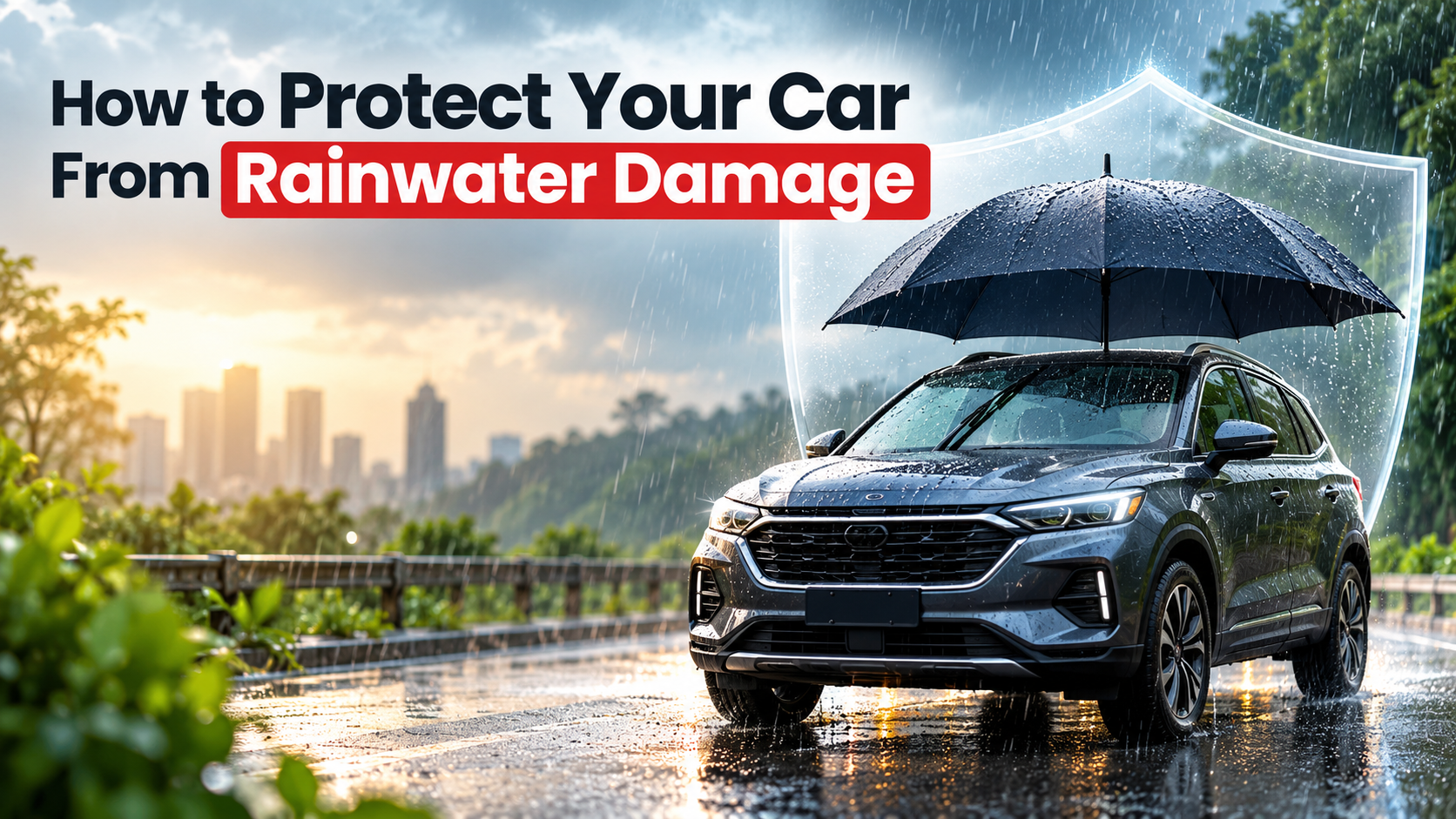
Monsoon brings much-needed rain, but it can also create problems for your car. Heavy rainfall, waterlogged roads, overflowing drains and standing water can cause damage to the engine, electrical components, brakes, tyres, paint and interiors. Even regular rainwater can create issues when a car has weak seals, blocked drains or poor maintenance.
Knowing how to protect your car from rainwater damage can help you avoid expensive repairs. A few simple checks before and during the rainy season can keep your car safer and more reliable.
Why Rainwater Can Damage Your Car
Rainwater itself may not immediately damage a properly maintained car. The bigger risk comes from prolonged exposure, water entering sensitive areas and driving through flooded roads. Dirty rainwater can also contain mud, chemicals and debris that may affect the underbody and paint.
Water entering the cabin can cause bad smells, mould and damaged upholstery. If water reaches electrical connectors or control modules, it can create difficult-to-find electrical problems.
Check Your Car Before the Monsoon
Inspect Door and Window Seals
Door rubber seals and window seals prevent water from entering the cabin. Check them for cracks, looseness or signs of ageing. Damaged seals should be replaced before heavy rainfall starts.
Clean the Sunroof Drainage System
If your car has a sunroof, check its drainage channels. Leaves, dust and other debris can block the drains. When the drains are blocked, rainwater may enter the roof lining or cabin.
Check Windscreen Wipers
Good visibility is extremely important during heavy rain. Wiper blades that leave streaks, make noise or fail to clear water properly should be replaced. Also check the windscreen washer fluid level.
Park Your Car in a Safe Place
Where you park your car during heavy rain can make a major difference. Whenever possible, park under a covered area. Avoid parking near low-lying roads, open drains, riverbanks or areas known for waterlogging.
Do not park directly under weak trees or old structures during storms. Falling branches can damage the roof, windscreen and body panels.
Avoid Driving Through Deep Water
One of the most important ways to prevent rainwater damage is to avoid flooded roads. You may not be able to judge the actual depth of water from inside the car. A seemingly shallow section can hide a pothole or damaged road surface.
Deep water can enter the engine through the air intake. This can lead to severe engine damage if the engine sucks in water. Water can also affect brakes, wheel bearings, electrical connectors and other components.
What to Do When You See Waterlogged Roads
- Look for an alternative route if possible.
- Do not follow another vehicle blindly into deep water.
- Avoid stopping the engine in standing water.
- Do not attempt to cross water when its depth is uncertain.
- If water levels are rising, move to a safer location.
Keep Your Car's Drain Holes Clean
Modern cars have drainage points in different areas to help remove water. Leaves, mud and dirt can block these drainage paths. This can result in water collecting around the windscreen area, doors, boot or sunroof.
During the monsoon, inspect and clean accessible drainage areas as part of your regular car maintenance routine. If you are unsure about their location, ask a qualified mechanic to inspect them.
Protect the Car's Paint
Rainwater mixed with road dirt can leave deposits on the paint surface. Bird droppings, mud and other contaminants can become harder to remove when left for a long time.
Wash your car regularly during the rainy season and dry it properly. A good-quality car wax or paint protection product can also help reduce the effect of environmental contaminants on the paint.
Check Brakes After Driving in Heavy Rain
Water can temporarily reduce braking performance, especially after driving through wet roads or puddles. After crossing shallow water, apply the brakes gently at a safe speed to help dry the braking surfaces.
If you notice unusual braking noise, vibration or reduced braking performance, get the car inspected rather than continuing to drive normally.
Take Care of the Car's Interior
Wet shoes, umbrellas and raincoats can introduce a lot of moisture into the cabin. Remove wet items when possible and use good-quality floor mats that are easy to clean.
If water enters the cabin, dry the carpets and upholstery quickly. Persistent moisture can result in mould, unpleasant smells and damage to interior materials.
Check Electrical Components After Heavy Rain
Modern cars depend on multiple electronic systems. Water exposure can affect wiring, connectors, sensors and control modules, especially if the vehicle has been driven through deep water.
If warning lights appear after heavy rain or your car develops unusual electrical behaviour, get it checked by a professional. Do not ignore repeated warning signs just because the car is still starting normally.
What to Do If Your Car Gets Flooded
If your car has been submerged or water has reached a significant level, avoid repeatedly trying to start the engine. Starting a water-affected engine can potentially increase damage.
Instead, move away from the flooded area if it is safe to do so and contact a professional recovery service. A proper inspection should cover the engine, transmission, electrical system, brakes, fluids, cabin and underbody before the vehicle is driven again.
Rainwater Damage Prevention Checklist
- Check wipers and washer fluid.
- Inspect door and window seals.
- Clean sunroof and body drainage channels.
- Keep windscreen and lights clean.
- Park away from flood-prone areas.
- Avoid driving through deep or unknown water.
- Clean mud and dirt from the underbody.
- Dry wet interiors quickly.
- Check brakes after heavy water exposure.
- Get a professional inspection after flooding.
Final Thoughts
Protecting your car from rainwater damage is mainly about preparation and making safe decisions during heavy rainfall. Regular maintenance, clean drainage points, healthy seals and good visibility can reduce many common monsoon-related problems.
The most important rule is simple: never take an unnecessary risk on a flooded road. If your car has been exposed to deep water, a professional inspection can help identify hidden engine, electrical, brake and interior damage before it becomes a bigger repair problem.
For professional car inspection, maintenance and repair support, you can also explore CarVaidya and get your vehicle checked by trained automotive professionals.