
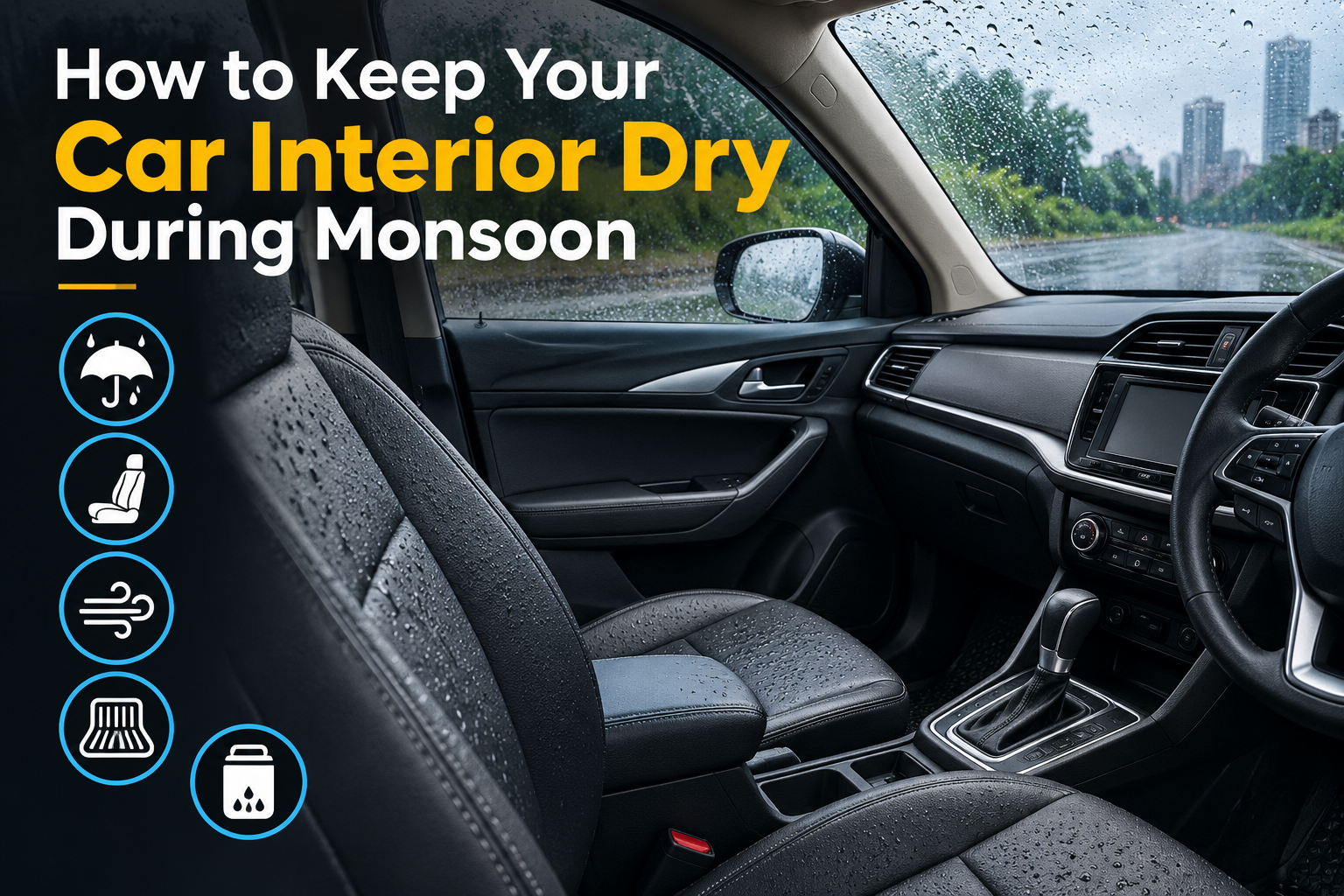
The monsoon season brings relief from the summer heat, but it also creates several challenges for car owners. Rainwater, wet shoes, muddy clothes, and high humidity can make your car interior damp and uncomfortable. If moisture stays inside the cabin for a long time, it may cause unpleasant smells, mould growth, stained seats, and damage to carpets.
Learning how to keep your car interior dry during monsoon helps protect your vehicle and maintain a clean, comfortable driving experience. With a few simple precautions and regular maintenance, you can prevent water from entering your car and manage moisture effectively.
1. Use Waterproof Car Floor Mats
Car floor mats are the first line of defence against rainwater entering your vehicle. Regular fabric mats can absorb water and remain wet for hours. This moisture may reach the original carpet underneath and create a musty smell.
Consider using waterproof rubber or all-weather car floor mats during the rainy season. These mats collect rainwater, mud, and dirt from wet footwear, making them easier to clean.
Tips for Maintaining Car Floor Mats
- Choose mats that fit your car's floor properly.
- Prefer mats with raised edges to prevent water from spilling onto the carpet.
- Remove and clean the mats regularly.
- Dry the mats completely before placing them back inside.
- Check the carpet underneath for trapped moisture.
Never allow a floor mat to interfere with the accelerator, brake, or clutch pedals.
2. Check Door and Window Seals
Damaged rubber seals around doors, windows, and the boot can allow rainwater to enter the cabin. Even a small gap may cause wet carpets, damp door panels, or moisture in the luggage compartment.
Inspect the rubber weatherstrips before the monsoon begins. Look for cracks, loose sections, hardened rubber, or visible gaps. Make sure all doors and windows close properly before leaving your vehicle.
If you notice water entering the cabin during heavy rain, ask a qualified mechanic to inspect the seals and drainage channels. Replacing damaged seals early can help prevent further interior damage.
3. Keep Car Windows Closed During Rain
Leaving your car windows slightly open may seem like a simple way to improve ventilation, but rainwater can quickly enter the cabin. This is particularly risky when you park outdoors during heavy rainfall.
Before leaving your vehicle, check that every window and the sunroof are completely closed. If your car has a sunroof, inspect its drainage channels periodically because leaves and dirt can block them.
Whenever possible, park your vehicle in a covered parking area or garage. A sheltered space reduces direct exposure to rain and helps protect the seats, dashboard, and carpets.
4. Keep Wet Shoes, Umbrellas, and Clothes Away from Upholstery
Wet footwear and umbrellas bring a surprising amount of water into your car. Placing them directly on the carpet or seats allows moisture to spread across the cabin.
- Shake excess water from umbrellas before placing them inside.
- Carry a waterproof bag for wet raincoats.
- Place wet footwear on a removable rubber mat.
- Keep a clean microfiber towel to wipe water from seats and door panels.
- Avoid placing damp bags or clothes on fabric upholstery.
These simple habits help keep your car interior clean and reduce the chances of mould and unpleasant odours.
5. Use Your Car AC to Control Humidity
Your car's air conditioning system can help remove moisture from the cabin air. High humidity often causes the windshield and side windows to fog up, reducing visibility during rainy conditions.
Use the AC with the defogging or defrost setting when windows become foggy. The system helps remove moisture from the air, while the blower directs air towards the glass.
Follow the ventilation recommendations in your owner's manual. If visibility becomes poor, slow down and pull over safely when necessary. Never compromise driving safety to clean a foggy windshield.
6. Clean and Dry Your Car Interior Regularly
Regular cleaning prevents dirt and moisture from accumulating inside your vehicle. After driving through rain, check the floor mats, carpets, seats, and boot for wet patches.
Remove the floor mats and let them dry in a well-ventilated area. Use a dry microfiber cloth to absorb surface moisture from suitable upholstery and plastic surfaces.
Avoid soaking fabric seats and carpets with cleaning solutions because excess water can penetrate the foam underneath and make drying difficult. If the carpet remains wet or a musty smell continues, consider professional car interior cleaning and drying services.
7. Check Drainage Channels and Water Leakage
Blocked drainage channels can cause water to collect around the windshield, sunroof, doors, and boot. If the water cannot drain properly, it may enter the vehicle through weak seals or other openings.
Ask a qualified technician to inspect and clear blocked drainage channels safely. Also check the footwells and spare-wheel compartment after heavy rain.
If you repeatedly find water inside your car despite keeping the windows closed, do not ignore the problem. Persistent leakage may require an inspection of seals, body joints, drainage tubes, or the air-conditioning drain.
8. Use Moisture Absorbers Carefully
Moisture absorbers can help manage excess humidity inside a parked car. Reusable silica gel packs or products designed specifically for automotive interiors may be useful during the rainy season.
Place moisture absorbers securely where they cannot obstruct the driver's view or interfere with the pedals and controls. Follow the manufacturer's instructions for replacement or recharging.
Remember that moisture absorbers cannot fix water leaks. If rainwater regularly enters your cabin, identify and repair the source instead of relying only on these products.
9. Protect Your Car's Electrical Components
Modern cars contain electrical wiring, sensors, control modules, and electronic accessories. Water entering the cabin can cause problems if it reaches sensitive components.
Never ignore wet carpets near the dashboard, unexplained electrical warnings, or water collecting under the seats. If you suspect water has reached electrical components, arrange a professional inspection. Avoid dismantling interior panels or handling electrical systems without the necessary expertise.
10. Follow a Simple Monsoon Car Care Routine
- Daily: Check for wet mats, wipe visible water, and close all windows.
- Weekly: Clean floor mats and inspect carpets for dampness.
- After heavy rain: Check the boot, footwells, door seals, and sunroof area.
- Monthly: Inspect drainage channels and look for persistent odours or leakage.
Keeping your car interior dry during monsoon requires regular cleaning, suitable floor mats, properly sealed doors and windows, and timely leak detection. Using the AC to control humidity and drying wet items quickly can also help prevent fogging, mould, and unpleasant smells.
Most importantly, never ignore recurring dampness or water accumulation inside the cabin. Early inspection can prevent more extensive interior damage and possible electrical issues. By following these practical monsoon car care tips, you can keep your vehicle cleaner, more comfortable, and better protected throughout the rainy season.